On This Page
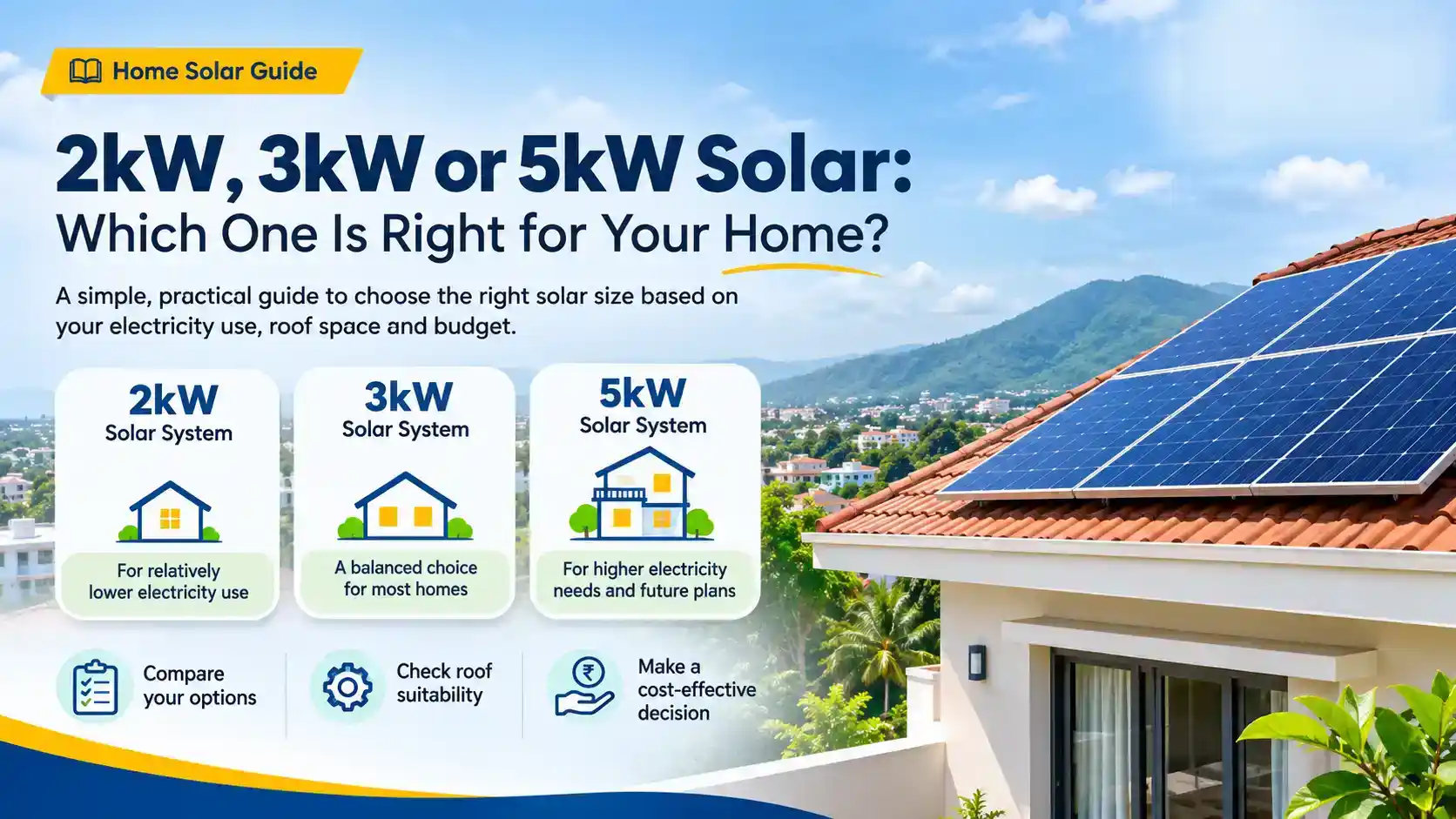
Choosing between 2kW, 3kW and 5kW solar? Start with your electricity usage, then compare how much useful electricity each option could produce for your home, the roof space it needs and the extra cost. A bigger system can generate more electricity, but it is not automatically the better buy.
You may have heard that 3kW is the ideal size for a home. Or someone may have told you to choose 5kW now because you might need more electricity later. Both suggestions can sound convincing—but neither tells you what is right for your home.
Here is a simple way to compare the options before you agree to a quotation.
2kW vs 3kW vs 5kW Solar: A Quick Comparison
| System size | When it may be worth considering | What you should ask |
|---|---|---|
| 2kW | Your assessed electricity requirement is relatively modest, or available roof space is limited. | Will a 2kW system generate enough useful electricity for my needs? |
| 3kW | You need more generation than a 2kW option may provide, and your roof is suitable. | Does the additional capacity make sense for my usage and budget? |
| 5kW | Your electricity demand is higher and the roof and electrical connection are suitable for a larger installation. | Will the extra electricity be valuable enough to justify the higher investment? |
These are starting points, not fixed recommendations for particular house sizes. Actual generation depends on your location, shading, equipment and installation conditions. Ask for site-specific estimates rather than relying on a standard monthly-units promise.
When Does Each Solar System Size Make Sense?
When should you consider 2kW solar?
A 2kW system may be worth considering if your electricity consumption is relatively low or you have limited suitable roof space. It usually requires less installation area than the larger options when comparing similar equipment and layouts.
But don't choose 2kW simply because the upfront quotation is lower. Ask how much of your electricity requirement it is expected to cover and whether you may soon need significantly more power.
When should you consider 3kW solar?
A 3kW option is worth evaluating when your electricity requirement is higher than a 2kW system can usefully serve. It can offer additional generation without committing to the size and cost of 5kW.
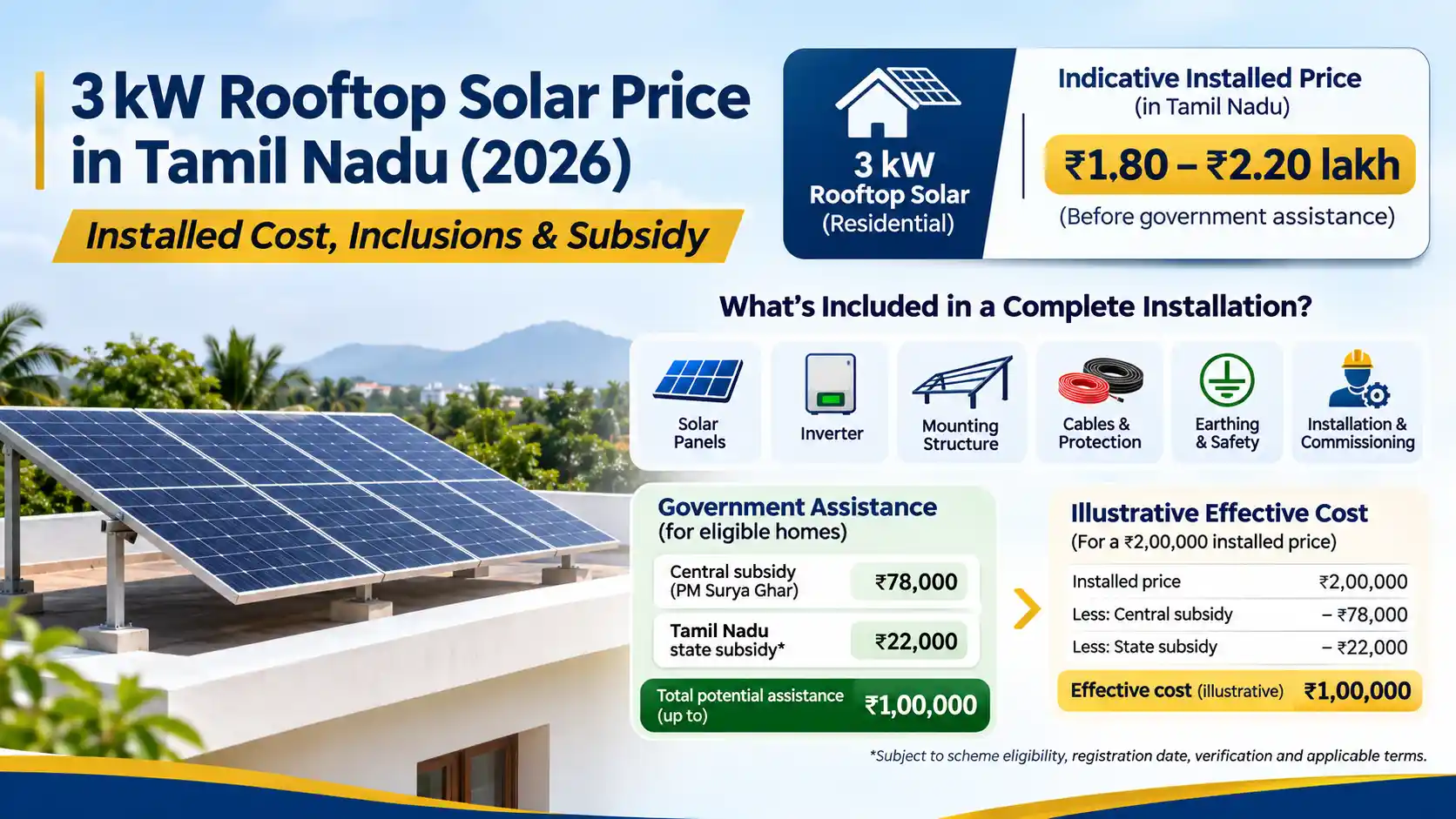
It's tempting to choose 3kW because the central residential subsidy reaches its capacity-based cap at 3kW under PM Surya Ghar. But subsidy is only one part of the decision. The right system still has to suit your electricity usage and your roof.
When should you consider 5kW solar?
If your household uses more electricity—for example, because of substantial air-conditioning or other regular loads—a 5kW system may be worth comparing. Your roof needs sufficient suitable space, and the electrical connection and project design must support it.
The deciding question is not just whether 5kW can generate more than 3kW. It is whether your household will receive enough additional value from that electricity to justify paying more.
5 Questions to Ask Before Choosing 2kW, 3kW or 5kW
1. How much electricity do you actually use?
Look at the units consumed on several electricity bills, ideally covering a full year. A single high bill or an unusually quiet month can give the wrong impression. Two similar-looking homes may have very different electricity needs.
2. Are your electricity needs likely to change?
Planning another air conditioner, an electric vehicle or more daytime use? Tell your installer. A realistic change in usage may affect the capacity worth considering. But don't spend more on a much larger system based only on a distant possibility.
3. Can your roof comfortably fit the system?
A large terrace is not necessarily a large usable solar area. Water tanks, nearby buildings, trees, roof condition and maintenance access all matter. You can find the detailed roof-survey considerations in Scaler Solar's existing rooftop solar sizing and feasibility guide.
4. Is the extra generation worth the extra investment?
Compare the estimated generation of two suitable capacities against your actual electricity use. Also ask what happens to surplus electricity sent to the grid and how it is credited under the applicable rules. More generation does not guarantee proportionately greater savings.
5. What does each quotation actually include?
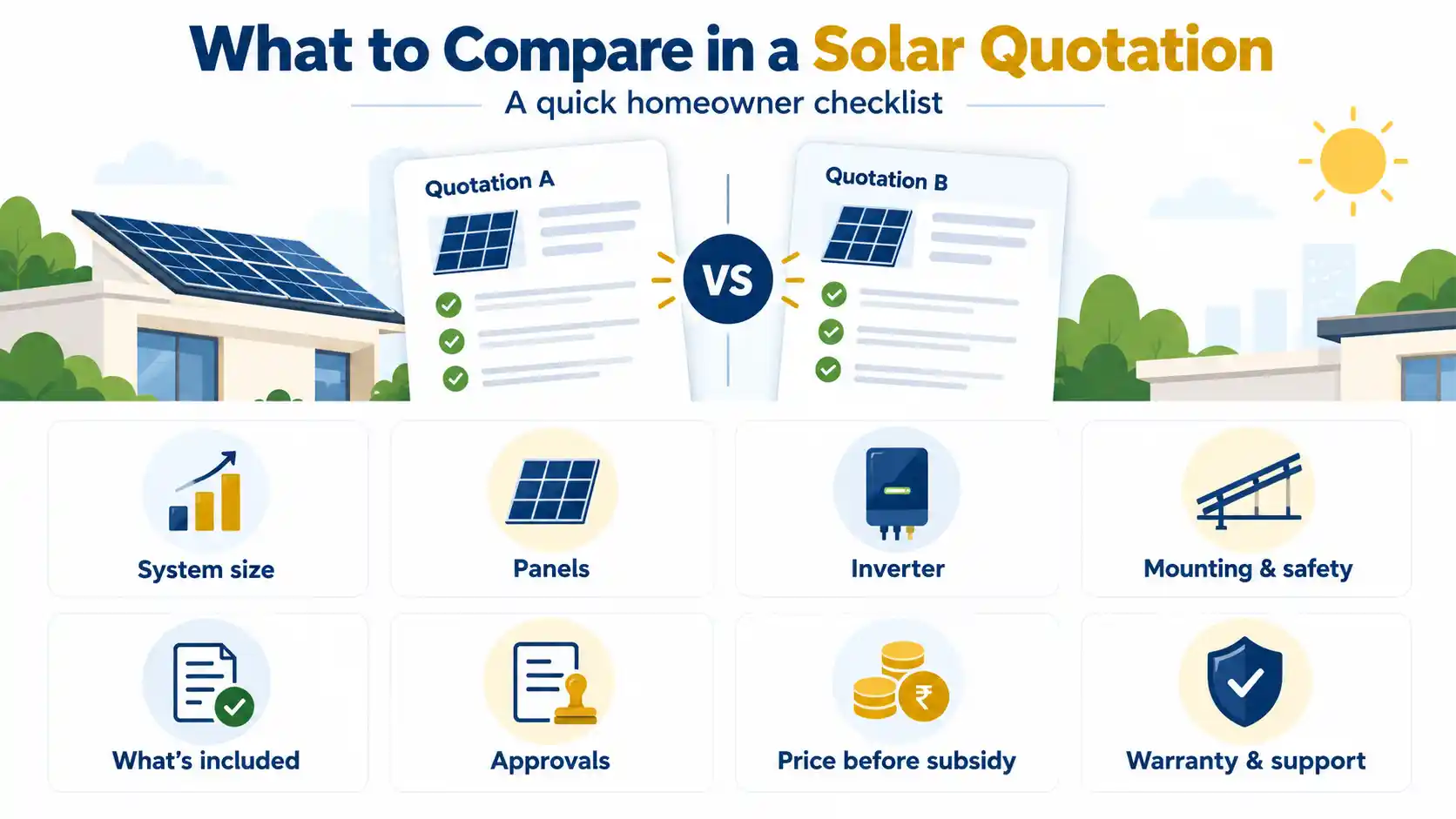
Check the panel and inverter models, mounting structure, electrical protection, installation scope, warranties and after-sales responsibilities. A lower total price is not a bargain if important items are missing. Ask for both quotations to use the same scope wherever possible.
3kW vs 5kW Solar: How to Compare Two Quotations
Imagine that you receive a 3kW quotation and a 5kW quotation. Instead of asking only, "Which one is cheaper?", ask the installer to put the assumptions side by side.
| Ask your installer | What a useful answer should show |
|---|---|
| Why this capacity? | The electricity bills and future needs considered in the recommendation. |
| How much might it generate? | A site-specific estimate, its assumptions and the effect of shading. |
| How will I benefit? | Expected self-use, possible exports and the applicable billing treatment. |
| What is included? | Comparable equipment, mounting, safety, installation and service scope. |
| What could change? | Roof limitations, approvals, future loads and any quotation exclusions. |
A good recommendation should explain why a particular size fits your home—not just give you a price per kilowatt.
If both options look viable, ask for a clear explanation of the extra investment in the 5kW system and the extra benefit you can reasonably expect. Without an approved, site-specific estimate, no one should promise you an exact saving or payback period.
Does 5kW Solar Get More Subsidy or Need More Approvals Than 3kW?
Under the PM Surya Ghar central residential assistance structure, the capacity-based subsidy reaches its cap at 3kW. That means choosing 5kW does not automatically increase the central subsidy. Eligibility and any additional assistance must be checked against the rules in force when you apply.
For grid-connected rooftop solar, the 2024 central electricity-consumer rules exempt complete applications up to 10kW from the utility's separate technical-feasibility study. Tamil Nadu's regulator has directed its utility to follow this exemption. You still need to follow the applicable application, metering, inspection and commissioning process.
In everyday terms: don't pick 3kW or avoid 5kW simply because of an assumption about subsidy or paperwork. Check the current requirements and compare what the two capacities would mean for your home.
Two Common Questions Before You Decide
Is 3kW enough for most homes?
There isn't a reliable one-size-fits-all answer. Some homes have modest electricity use; others have heavy air-conditioning or other demands. Look at your units consumed and ask for a capacity recommendation based on those records.
Will 5kW solar make my electricity bill zero?
Not necessarily. Your bill depends on electricity use, solar generation, applicable fixed charges and how imported and exported electricity is accounted for. Ask for a realistic estimate—not a zero-bill promise.
Which Solar Size Should You Choose?
If your needs are relatively modest, start by evaluating 2kW. If you need more generation, compare 3kW. If your usage is higher and your property is suitable, ask whether 5kW provides enough extra value to justify its cost.
The best solar proposal is the one that makes sense for your home and explains why. Bring your recent electricity bills, tell the installer about realistic future changes, and ask to compare two suitable options before deciding.